


Evolving Wealth Structures: Key Insights from STEP Johannesburg Roundtable
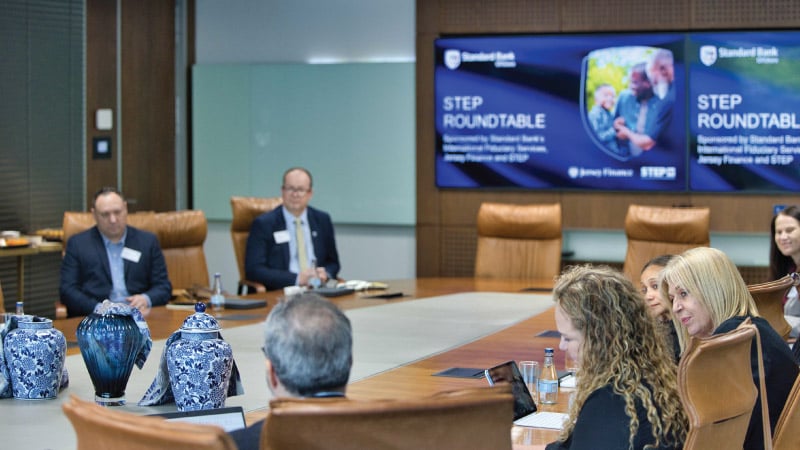
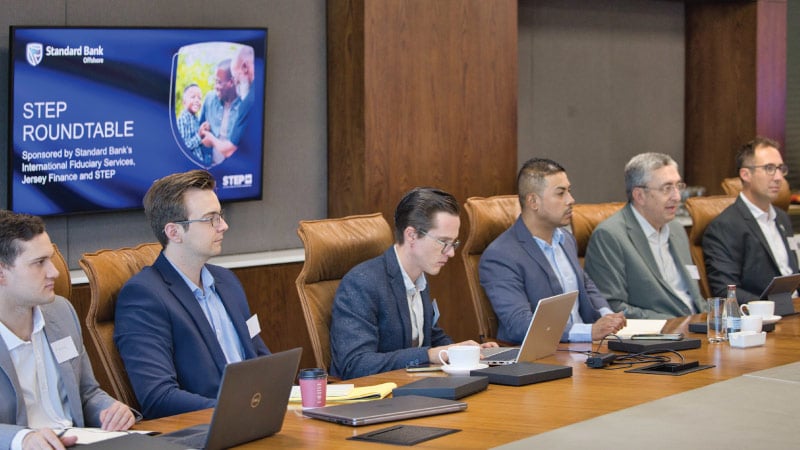
On 17 October 2025, STEP Johannesburg, Standard Bank, and Jersey Finance jointly held a roundtable discussion in Johannesburg, Gauteng. The event brought together 18 professionals from the legal, accounting, investment, and fiduciary sectors to participate in an open and lively debate on current trends shaping fiduciary and legacy planning in South Africa and across the continent.
- Michael-Pierre Giraud, Standard Bank International Fiduciary Services, Jersey
- Jaco Van Jaarsveld, Standard Bank International Fiduciary Services, Mauritius
- Dr Rufaro Nyakawata, Jersey Finance
- Hanna Marais Chair: STEP South Africa
- Joshua Eveleigh, Primerio
- Michael Williams, Primerio
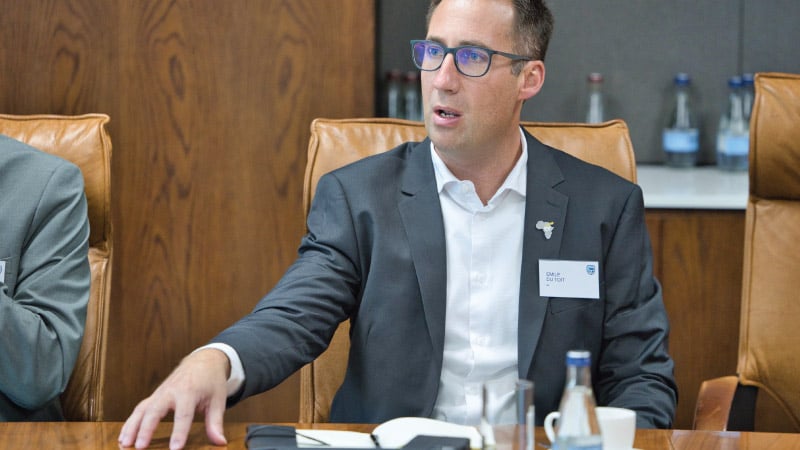
- Emile du Toit, EY
- Roelf Odendaal, Boston Multi Family Office
- Kyle Jason, Fyfe Werkmans Attorneys
- Chanel Schoeman, Fiduciary Specialist
- Madeleine Shubert, International Tax & Fiduciary Attorney
- Nicole Paulsen, Osborn Wellsted Pauslen
- Stefan Viljoen, Standard Bank Wealth and Investment
- Deon Beachen, ENS Africa
- Kevin Kairuz, Old Mutual Wealth International
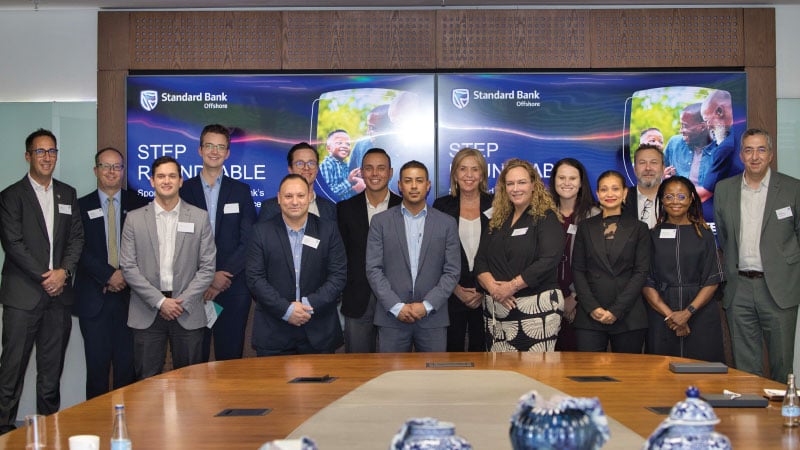
The discussions explored how wealth planning is evolving as families operate across multiple jurisdictions, the practical challenges of compliance within an increasingly complex regulatory landscape, and the growing influence of next-generation priorities such as ESG and impact investing. The session was chaired by Michael Giraud, Head of Standard Bank’s International Fiduciary Services in Jersey, alongside Hanna Marais Chair of the STEP Johannesburg Branch A clear consensus has emerged: South African families with wealth now tend to be highly multigenerational. Many are linked to both South African and offshore trusts or similar structures to manage commercial and political risks and safeguard family wealth for future generations. While these structures offer resilience, they also add extra layers of complexity as families expand geographically and across generations.
A common challenge highlighted by participants is that descendants, who are often beneficiaries, make personal decisions about domicile, study, or working abroad without fully understanding the tax and legal implications for their family structures. Even something as simple as accepting a temporary job overseas can lead to unintended consequences for a discretionary irrevocable trust, such as activating foreign tax transparency rules or resulting in unexpected tax treatments. Several practical examples were shared, demonstrating how such decisions can unintentionally expose well-structured trusts to foreign tax liabilities or create reporting obligations that were not part of the original planning.
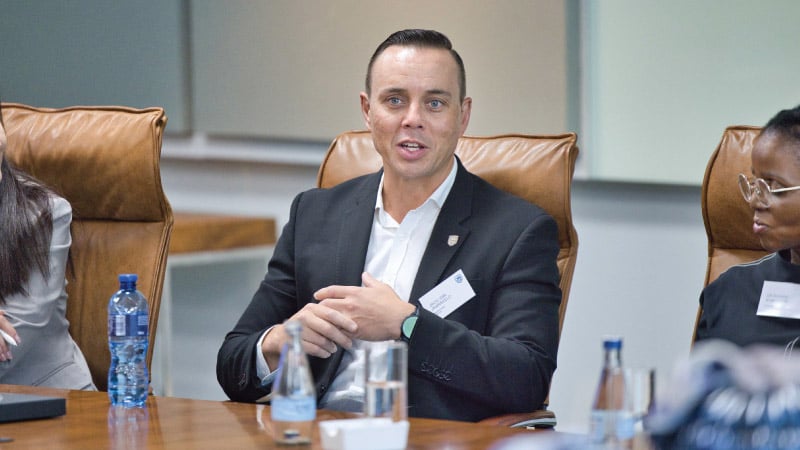
Professionals agreed that limiting early trustee or legal involvement to reduce professional fees often costs families more in the long term. Establishing an offshore trust is fairly straightforward; maintaining its effective operation over many years is where the real difficulty lies.
Family governance does not need to be complex or expensive. A regular, simple annual family meeting with trustees, lawyers, financial advisers, and accountants can be very effective. These meetings can address investment strategies, tax residency issues, cross-border movements of beneficiaries, compliance concerns, and risk registers.
Over time, this approach helps formalise knowledge, increase family awareness, and reduce surprises. By incorporating governance, structures shift from fixed legal frameworks to flexible, adaptable ones that evolve with the family. Importantly, such engagement also educates beneficiaries, allowing them to foresee and communicate potential risks before they result in irreversible tax or legal issues.
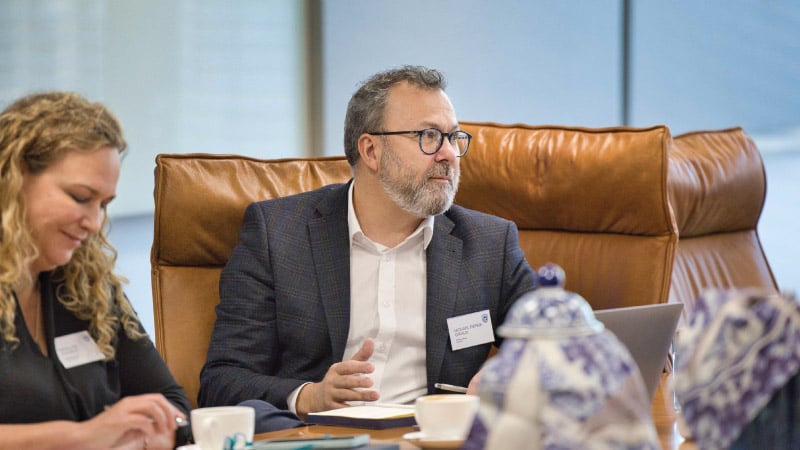
Another notable change observed is how families organise their structures. Historically, many South African families externalised wealth to alter their tax status and domicile permanently. While wealth protection remains vital, many families are now choosing to stay in, or return to, South Africa.
Offshore structures are still used to safeguard capital and manage risk. However, funds are increasingly allocated locally for daily living and investment, even creating a local branch or a subsidiary of a foreign company where a foreign trust owns the shares.
This hybrid model introduces new planning dynamics. Structures must now serve two purposes: maintaining offshore resilience and supporting local financial realities. For advisers, this involves carefully integrating tax planning, exchange control considerations, and governance strategies. Interestingly, there has also been a noticeable increase in foreign individuals retiring to South Africa. Contributing factors include changes to the UK’s non-domicile regime, US citizens relinquishing citizenship or green cards, and shifts in European civil law jurisdictions. Many are attracted by South Africa’s climate, lifestyle, and cost advantages. This migration trend has created new planning opportunities for professionals, especially in residency planning, asset structuring, and cross-border compliance.
A candid discussion took place regarding compliance. Global regulatory standards and anti-money laundering initiatives have reshaped the financial and fiduciary landscape. South Africa, through a combination of external pressure and internal legislative changes, has been reoriented more closely with international standards.
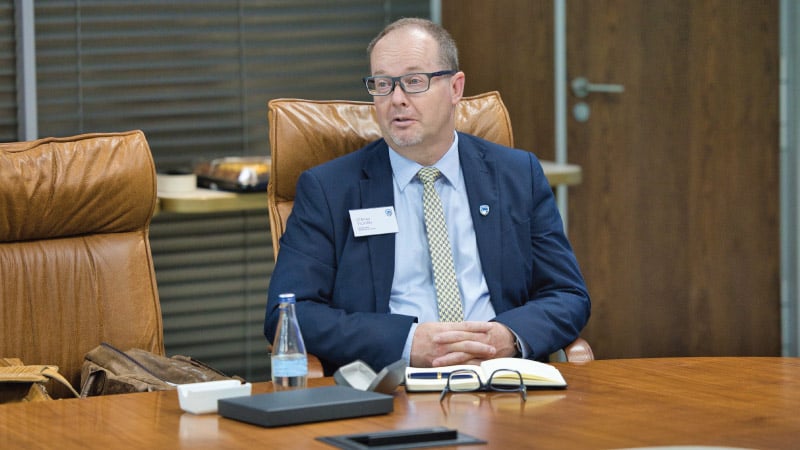
Clients sometimes view compliance as just an administrative burden however, in reality, noncompliance is simply not an option. If a structure is not compliant then it cannot operate in a modern environment with inter-governmental reporting, increased transparency and robust local and international AML legislation all considerations. The compliance hurdle is high these days and even wholly compliant international structures may encounter difficulties if trustees are unable to open bank accounts due to incomplete compliance documentation. Evidencing long held family wealth, which dates back to when people may not have retained documentary evidence of their wealth can be problematic when opening a bank account for what is considered a high-risk structure.
More importantly, setting client expectations early regarding compliance requirements is crucial to prevent delays, frustrations and even dead ends when some way into the account opening process. All the professionals agreed, and as noted, non-compliance is not an option and the associated costs – including penalties, loss of banking access, or tax leakage (not to mention reporting the professionals obligated reporting to the authorities) – will far exceed professional fees.
As international regulatory frameworks become more stringent and widely adopted, establishing and maintaining offshore structures that conform to standards like those set by the Financial Action Task Force and US legislation requires specialised expertise and cannot be ignored. Communicating the importance of this expertise remains a key challenge. For clients with substantial wealth, this value is generally recognised. For smaller structures with limited professional involvement, expectations often need to be adjusted.
A particularly lively discussion focused on the influence of the next generation. As they become more actively involved in family wealth structures, younger family members are increasingly asking different questions from their parents. ESG and impact investing are becoming mainstream topics in trustee discussions.
ESG refers to environmental, social, and governance considerations in investment strategies. Impact investing goes a step further by aiming for measurable positive social or environmental outcomes alongside financial returns. These approaches reflect wider shifts in societal values and are now influencing how family wealth is allocated.
For trustees, this presents both opportunities and challenges. They must balance fiduciary duties to safeguard and grow trust assets with beneficiaries’ preferences for values-based investment strategies, which may not consistently deliver market rate financial returns. Different jurisdictions approach this differently. Some have introduced legislation that allows trustees to explicitly incorporate ESG principles, while others require such investments to be kept in separate purpose trusts or companies. In either case, professionals will increasingly need to handle these discussions carefully as they become a routine part of multi-generational planning. As the debate concludes, participants reflect on the trends likely to influence the industry in the next three to five years.
Several themes emerge:
- A rising trend is simplifying overly complex structures by reducing layers and associated costs.
- Rising duplication of structures as entrepreneurs replicate South African business models abroad, often driven by the next generation.
- A notable increase in family governance frameworks, customised to each family’s values, dynamics, and strategic goals.
- Greater recognition of the variety within South African families requires more nuanced and culturally sensitive structuring approaches.
- The use of “mothership” trusts with offshore components enables younger generations to establish their own legacy structures while staying connected to core wealth.
- A focus on nurturing young professionals through mentorship and knowledge sharing, ensuring that institutional knowledge is transferred effectively.
The session concluded on a lighter note, with Michael quoting George Best: “I spent a lot of money on booze, birds and fast cars. The rest I just squandered.” It was a fitting ending to a discussion that combined strategic insight with honest, real-world experience.
The roundtable was both insightful and collaborative. It offered a platform for professionals to share ideas freely, explore emerging challenges and opportunities, and collectively raise the standards of fiduciary and legacy planning for South African and African families in a rapidly changing global environment.
#WealthPlanning #FamilyGovernance #TrustStructures #CrossBorderWealth #RegulationAndCompliance #FiduciaryServices #ESGInvesting #ImpactInvesting #NextGenWealth #STEPJohannesburg
A version of this article was first published and distributed in the STEP Johannesburg Roundtable Insights 2025 issue.
Click here to read more about our international fiduciary services.